From emergency to emergence: corporate social media engagement during pandemic
The pandemic presents an opportunity for corporations around the world to reevaluate and reconnect with their key stakeholders.

The pandemic presents an opportunity for corporations around the world to reevaluate and reconnect with their key stakeholders.
Even though they are no magical passe-partout, cooperatives can be a source of inspiration for constructing a post-corona society that puts the economy at the service of humankind.
We contend that anti-slavery corporate policies and structures can be ‘symbolic’ responses to slavery without being ‘substantive’ (meaning that such responses symbolize attention to law and legal principles, but do little or nothing to effectuate legal ideas within corporate organizations).
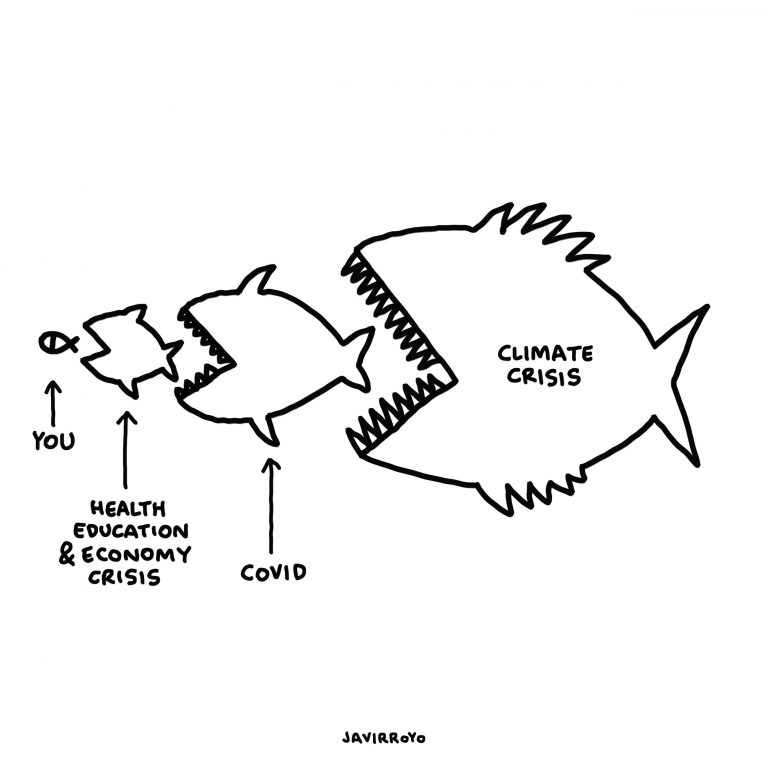
In a time when managers and CEOs are voluntarily or somehow forced to be activists, their attention to social and environmental issues and the grand challenges of 2020 is now under the society’s microscope.
How can the population be encouraged to use contact tracing apps?
Speed comes with risk. This leads us to propose that societal and industry leaders, together with citizens, have not sufficiently considered the alternative: Collective learning, i.e. sharing knowledge that can be leveraged and combined with that of others.
We investigate how the Australian mining industry convinced the Australian government to drop a proposed tax on the mining industry’s super-profits (that is, an additional company tax after the subtraction of a tax-free allowance).
Can a Black Swan event, such as COVID-19, lead into a possible rapid deinstitutionalization of business schools? And, if so, how can we respond to ensure long-term sustainability?
How can business leaders productively process the sheer volume and pace of information sharing, let alone parse out good science from bad? More significant still, how will they proactively support society in making sense of critical, possibly life-saving, information?
We examine firms with a dual-class share structure where insiders (officers and directors) have voting control over the firm that exceeds their ownership stake. We find that when these insiders have significantly more voting control, their firms demonstrate poorer, rather than better, environmental performance.