
Business & Society Celebrates Dalit History Month
We will celebrate April as Dalit History Month, in line with our renewed vision – Leadership for Inclusion and Impact.
We will celebrate April as Dalit History Month, in line with our renewed vision – Leadership for Inclusion and Impact.

A long-run macroeconomic trend on worldwide economic progress will come as little comfort to those who are left behind, face poverty, injustice, extinction, or even simply suffer short run losses. Instead of waiting for long-term changes to unfold, we need to find and enable mechanisms that can help us short-circuit the development process and make markets work better for all even in the short run. This essay outlines three challenges that need to be confronted to make markets work for all.

The main goal of Business & Society’s (BAS) social media presence is to support the dissemination of business and society research among scholars, students, and practitioners. By promoting the visibility of BAS publications and sharing any information that might be useful to our community, we want to inspire researchers, facilitate knowledge creation, and increase the social impact of the journal.

When we took over editorship of Business & Society one year ago, we noted that “we are committed to impact and influence beyond publication, impact factors, and journal rankings. We aim to contribute to the development of novel and workable solutions to the urgent challenges that the world presently faces”. We are happy to announce one of the initiatives we took to honour this commitment: the introduction of a new format, Business & Society Commentary!
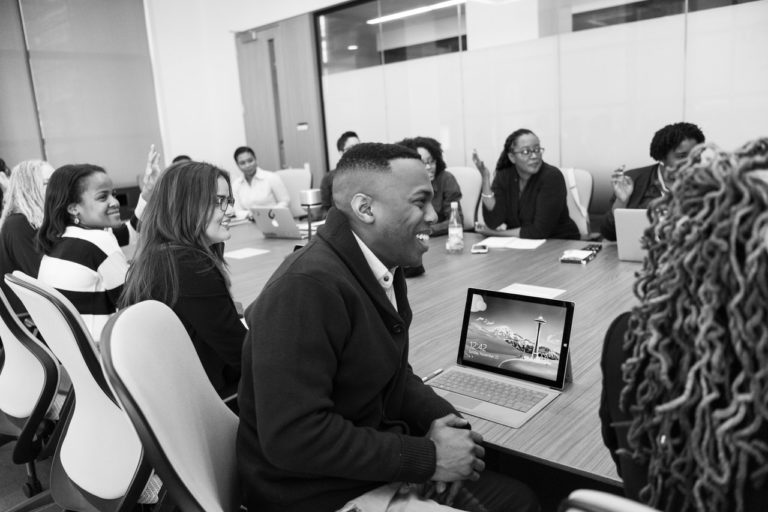
This quick overview helps to take stock of the steps Business & Society took to engage with issues of race and racial justice. This is a useful starting point for us to think about the steps we need to take as a scholarly community to recognize, celebrate, and facilitate the achievements of Black people and to push harder for inclusion. And, also to use this moment to think about the oppressed and marginalized groups in other contexts to consider how we can address issues of inequality and inclusion in our research and practice.

I cover the who, how and why of social media in Business & Society (BAS). In doing so, I do not just limit myself to highlighting numbers about the social media impact of our journal. Rather, I also use the opportunity to offer an insight into the backstage of our social media work and the reasons for doing it. I would also like to share some tips about why and how you can contribute to supporting the presence of BAS in social media.

In a time when managers and CEOs are voluntarily or somehow forced to be activists, their attention to social and environmental issues and the grand challenges of 2020 is now under the society’s microscope.
This ongoing pandemic has highlighted the errors of the functioning of our economic system, particularly shedding light on the various inequalities.
Given the unprecedented and unique nature of this context, each of these issues– the nature of problems at the intersection of business and society, the differential effects of crises on individuals, businesses, and societies, and their varied understandings and responses – contain in them a range of theoretical puzzles and research questions.